

Understanding Your Tenancy Agreement
A tenancy agreement is between a landlord and one or more tenants. It is agreed upon before moving into a property and will cover things such as what is considered fair wear and tear, what expectations are in terms of cleanliness, if there are any extra tenant fees and how both parties are protected.
The agreement will also provide an inventory of items in the property and who is responsible for tenancy cleaning.
A deposit protection scheme is put in place to protect both the landlord and tenant to avoid any disputes or issues. At the end of the tenancy, this deposit will be refunded as long as the agreement has been adhered to.
Types of Deductions
When occupying a rental property, a landlord and their tenant or tenants are required to sign an agreement. This is to prevent issues down the line and avoid any disputes going through legal channels.
With new tenants, a deposit is taken by the landlord, which covers any wear and tear and costs. They are then legally allowed to deduct money from the deposit if any damage is considered not normal wear and tear, such as minor scuffs.
As a tenant, you should be aware of what is considered to be an unfair deduction and how you are protected under the Deposit Protection Scheme. An inventory should be supplied, and photos can be taken prior to moving in to cover both parties in case proof is needed to dispute an unfair deduction in the money being held as part of the deposit.
Can a Landlord Deduct from a Security Deposit?
Yes, if it’s warranted. Minor wear and tear is considered reasonable, as are worn carpets that have been there for an extended period of time. However, if force has been applied in damaging any item in the property, or cleanliness hasn’t been maintained, and, for example, professional cleaning is required, then a landlord is allowed to deduct the money from a security deposit.
Keeping all receipts from any repairs that have been covered can be taken as evidence that there’s no need for a deduction.
What is the Deposit Protection Service?
This is a scheme that ensures you, as a tenant, start and end your tenancy without disagreements, and if there are, you can claim to have those disputed within reason. As a landlord, you are legally required to protect a deposit within 30 days of receiving the amount, usually a month’s rent. Check more here:
https://www.gov.uk/deposit-protection-schemes-and-landlords
What is Considered Fair Wear and Tear vs. Damage
Normal wear and tear in a property during tenancy is considered to be any reasonable wear on items such as carpets, curtains, furniture, and paintwork. Loose fixtures or wallpaper tears fall under the reasonable wear and tear.
Damage, on the other hand, usually consists of holes in the walls, stains that haven’t been dealt with, burns on furniture and torn carpets. Anything that falls under negligence is where the tenant is held liable and will need to either pay for the repairs, or the amount will be taken from their security deposit.
How To Dispute Unfair Deductions and What is The Dispute Resolution Service?
The free dispute resolution service is an unbiased company to dispute unfair deductions and resolve disputes during a tenancy on a property. It’s recommended that issues should try to be solved through mediation between the landlord and tenant before acting on raising a dispute. The deposit protection scheme offers a service that can assist with resolving these issues before they escalate.
Writing a letter to a landlord is the best way to handle this, and it can also act as proof you’ve tried to diffuse the situation before taking it any further. Any photos, communication, receipts, invoices, or further evidence should be kept as it will prove the tenants innoncence in a claim.
Letting Agent Responsibilities
As a letting agent, you are responsible for informing tenants of their rights and responsibilities during a tenancy. Both the letting agent and tenants should be given a copy of the agreement, as well as an inventory of items in the property that are not to be removed. They can also assist with solving disputes.
Agent responsibilities include:
- Collecting any missed payments.
- Finding a tenant or tenants for the property.
- Managing the property and making sure it remains in good condition, i.e. cleaning is maintained.
- Letting the tenants know when an inspection is due so they can prepare.
- Keeping an inventory and making sure any items belonging to the landlord are returned at the end of tenancy.
- Getting the property ready for the tenants to move in.
- Being the point of call at the start, end and during a tenancy.
- Assessing and implementing tenant fees.
Are Landlords Responsible for Professional Tenancy Cleaning Services Between Tenants?
Yes, landlords are there to make sure a property is clean and in good condition at the start and end of a tenancy and that it is ready for tenants to move in.
It’s also required to check that appliances are not only clean but also in working condition when tenants leave, and before new occupants move in. This is why having an inventory is essential, as it prevents extra charges to pay upfront or evolving into a situation where a tenant and landlord disagree.
Can Landlords Charge Tenants for Professional Cleaning Services?
The responsibility of cleaning costs between agreements lies with the landlord. If landlords charge for cleaning services, it should be written in the agreement or, at the very least, communicated to the tenants to avoid any disputes.
Some landlords will hire professional cleaners and pay them regularly by including a charge for cleaning in the rent.
What Are The New Rules For Landlords in 2026?
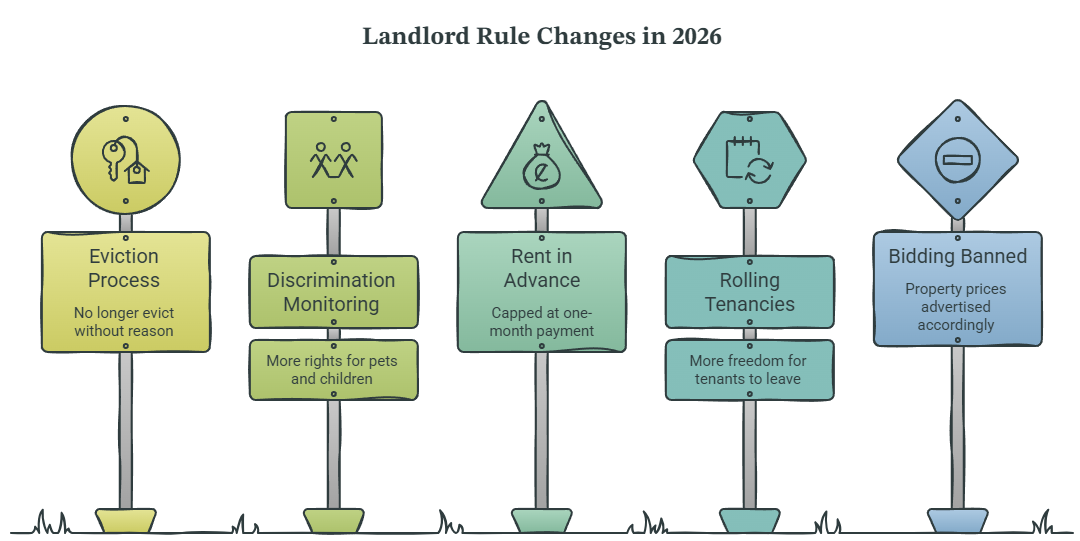
New rules for landlords will effectively change after 1st May 2026. These will include:
- Evictions will go through the appropriate channels, and landlords will no longer be able to evict without a reason.
- Discrimination will be monitored, and more rights will be given to those who have pets or children. Landlords will not be allowed to deny occupancy due to certain factors.
- Claiming and acquiring rent in advance will be capped at a one-month payment.
- Landlords will offer tenants rolling tenancies instead of fixed-term agreements, giving them more freedom to leave if needed.
- Bidding will also no longer be allowed, and property prices should be advertised accordingly.
FAQ
Landlords can’t usually deduct for normal “fair wear and tear”, such as reasonable wear to carpets, curtains, furniture, and paintwork over time. Deductions are more likely to be justified where there’s damage or neglect, rather than everyday use.
Deductions may be unfair if they relate to normal wear and tear rather than damage. Examples of damage that can justify deductions include holes in walls, stains that haven’t been dealt with, burns on furniture, and torn carpets – especially where negligence is involved.
A landlord may deduct for cleaning if cleanliness hasn’t been maintained and professional cleaning is required. To avoid disputes, any cleaning charges should be written into the tenancy agreement or clearly communicated to tenants.
Start by trying to resolve the issue directly with the landlord (mediation is recommended before escalating). Put your position in writing (a letter can help) and keep evidence such as photos, communication, receipts, invoices, and any other documentation that supports your case.
A deposit protection scheme is designed to protect both landlord and tenant and help prevent disagreements at the end of a tenancy. If there is a dispute about deductions, the scheme offers a free dispute resolution service to help resolve it.