
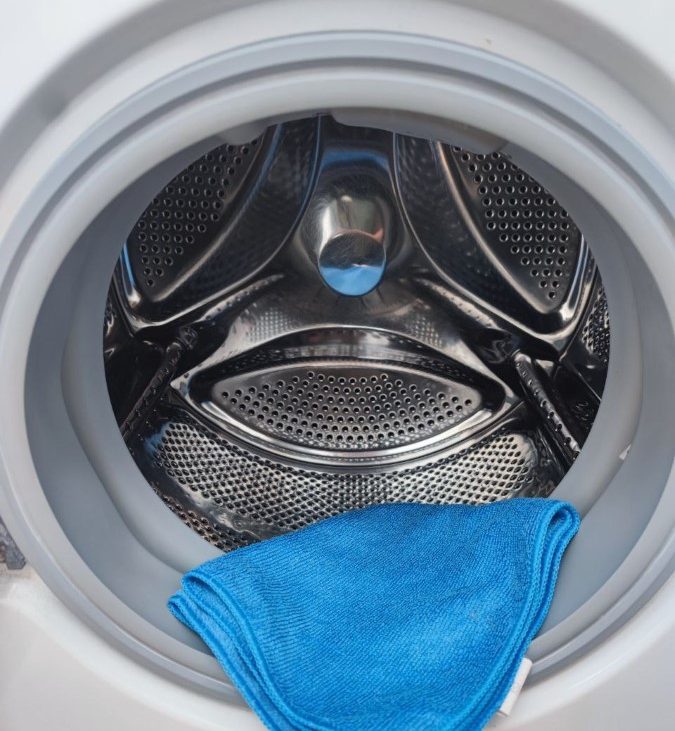
The washing machine’s rubber seal is the part of that particular appliance that tends to get dirtiest the fastest. To complicate things even further, it poses quite a bit of challenge to get cleaned, even if you do it very often. The reason for this is because the rubber door seal is the place where the water drains during every wash cycle. As a result, the job your washing machine does with keeping your clothes clean suffers. On top of that, not paying enough attention to cleaning the rubber seal of your washing machines will cause damage to the appliance in the long run, causing it either to need repairs, or to replace the whole washing machine drum altogether.
If you have a front loader, the washing machine door seal is basically a little gutter, and it can turn into a breeding ground for grime if you shut the washing machine door right after a load. A quick wipe of the door seal after washing, especially around the bottom, helps stop water and lint from sitting there. This also keeps the washing machine seal from smelling musty between washes.
What is the GREY gunk in my washing machine seal?
In all likelihood, it is old soap or laundry detergent that tends to build up around the washing machine door. It might sound relatively harmless, especially when compared to the black mould that you can also find around the washing machine seal. The black mould is fungal growth like every other that forms around moist areas. In reality, both the grey gunk and the black mould will most likely:
- Pose a threat to yours and your family’s health.
- Decrease the efficiency with which your washing machine is handling the laundry.
- Cause your washing machine to break down faster.
That grey film is often detergent residue mixed with skin oils and lint, and it sticks to the folds of the washing machine door seal where airflow is poor. If you notice it returning quickly, try using a little less detergent and give the detergent drawer a rinse so it doesn’t keep feeding buildup. Keeping the washing machine seal dry between loads makes a big difference too.
Because of this, it is of utmost importance that you learn how to clean your washing machine’s seal, and do it on a regular basis with the right tools and perseverance.
What do you need to get black mould off a washing machine door seal?
The fastest and most fool-proof way to remove mould from washing machine rubber seals requires:
- Bleach
- Specially formulated Biocidal detergent or spray bottle filled with equal parts white vinegar and water
- A bucket of warm water
- Baking soda
- Clean cloth
The baking soda part is optional. Soda crystals nevertheless are known for absorbing bad odor, so you might be willing to try them out. Soda crystals are cheap, and to be found in every household, so they are worth the gamble.
How do you clean the rubber seal on a washing machine?
Before you try to clean the washing machine, make sure it is empty and dry to keep your washing machine clean. Wear protective gloves at all times when you clean the washing machine, even if you are using a hundred percent homemade products. Proceed to spraying the cleaning product of your choice on a dry cloth. Wipe the entire washing machine seal with it, and don’t forget to pay special attention to the folds of the rubber seal. In some cases, you might want to use more than one microfiber cloth to wipe the mould, grease and gunk away.

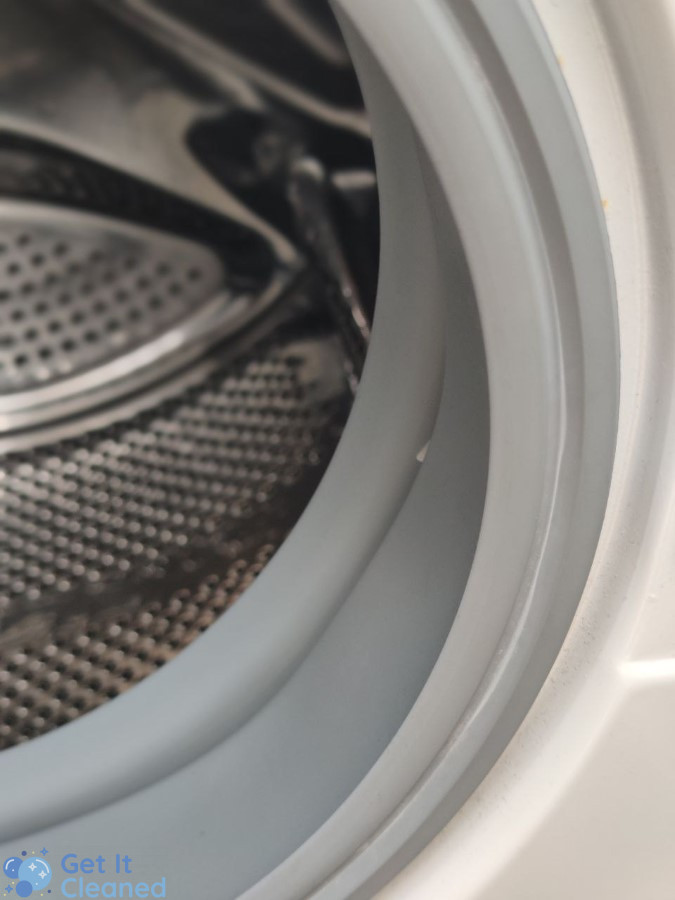
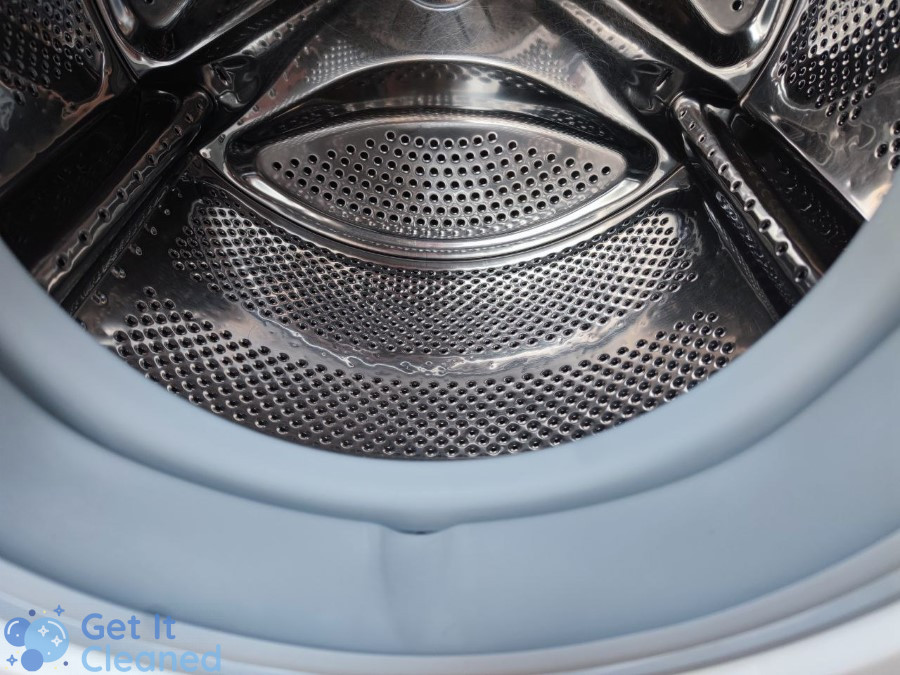
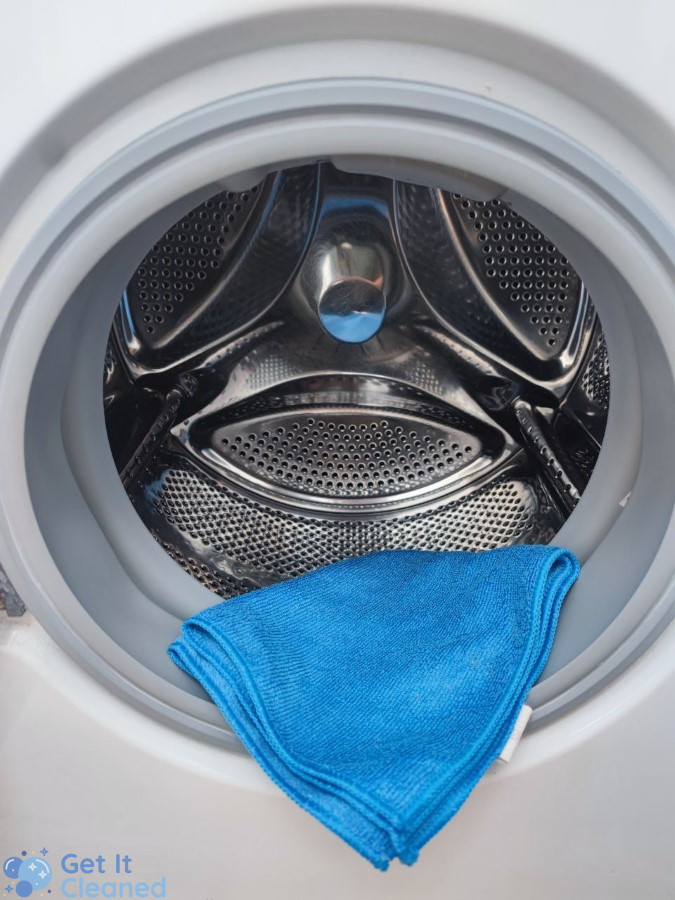
Once you are done wiping the build-up, inspect the rubber seal for a final time to make sure it is thoroughly clean, then rinse it with hot water. Leave the door open and wait for a couple of hours for the rubber seal to dry out, and proceed to removing any excess extra water with a dry microfiber cloth. You should repeat the whole process again using the white vinegar solution and finally sprinkle baking soda on the rubber seal. Leave the baking soda for half an hour. Rinse again with hot water and leave everything to dry once again.
For washers with a self cleaning function
If your model has a self cleaning function, run it after you’ve wiped the washing machine door seal so any loosened debris is flushed out of the washing machine drum. If there’s no self cleaning function, you can do a cleaning cycle by running an empty cotton cycle on hot with your usual cleaner. This helps rinse out what you can’t see behind the door seal and around the washing machine door.
Does bleach damage rubber seals in a washing machine?
Bleach is generally save to use on washing machine rubber seals. If you are concerned, read the user manual for the appliance. If it is unsafe to use bleach, the manufacturer would explicitly state so there. Furthermore, after you use bleach, you’d want to leave the door open so that the odor escapes. An empty hot cycle will help the process as well.
Troubleshooting and More
Having issues with your washing machine rubber seal? Try these:
- Mold and mildew: If you happen to see mold or mildew on the rubber seal, don’t be afraid and fill the washing machine drum with equal parts water and any white vinegar and right after that do a hot cycle.
- Stains and odors: For some pesky stains or smells on the rubber seal use equal parts water and baking soda (50/50). Apply generously to the seal and let sit for about 30 minutes then wipe clean with a damp cloth.
- Replacing the rubber seal: If nothing else helps and the rubber seal is damaged or worn out it might be a good idea to swap it with a new one. Check your washing machine manual or call a technician for help.
- Regular maintenance: Don’t postpone – clean the rubber seal and detergent drawer regularly (e.g once a month) to prevent issues and keep your washing machine running smoothly.
- Check the manual: Check your washing machine manual for specific cleaning and maintenance instructions as different models usually vary.
By following these tips and avoiding these common mistakes you can keep your washing machine rubber seal clean, fresh and working properly.
If smells linger even after cleaning the washing machine seal, check for trapped coins, hairpins, or lint hiding in the door seal folds, then wipe again and run the self cleaning function if your machine has it. In some washing machines, odours also hang around if the detergent drawer is slimy, so washing it separately can help. Keeping the washing machine door ajar between loads is a small habit with a big payoff.
How to prevent getting your washing machine seal mouldy and dirty
The washing machine’s damp environment inside is the perfect place for mould to form – and you don’t want that, especially on the washing machine’s rubber seal. To be sure this doesn’t happen, leave the detergent drawer and washing machine door open after every wash cycle until any excess moisture is evaporated. You can actually even use a dry cloth to remove the moisture as well as remaining dirt from the rubber door and surfaces. A hot wash on empty will make sure no dirt remains in the washing machine as well. Just remember to leave the door open once you are done. Regular cleaning of your washing machine is the easiest way to make sure you won’t have much problems with it. Prevention is key.
Frequently Asked
Wipe it with a cloth and a 50/50 mix of white vinegar and water, then rinse with hot water and dry. For extra freshness, add baking soda for 30 minutes and rinse again.
Smells often stay if dirt is still trapped in the folds or the detergent drawer. Clean those areas again and run a hot empty or self-clean cycle.
Usually yes, but check your manual first. Don’t leave it soaking, rinse well, and air the machine afterward.
Leave the door and detergent drawer open after washes, dry the seal, and run an occasional hot empty cycle – that’d do the trick.
Use the self-clean cycle if available. Otherwise, run an empty hot cotton cycle to flush out residue.